
Payroll records play a critical role in running a compliant and organized business. They help employers track wages, verify tax payments, support financial reporting, and respond to audits or employee questions. Yet many business owners are unsure which payroll documents they should keep and how long those records need to be retained.
Keeping payroll records for the appropriate amount of time can help protect your business from compliance issues and make year-end reporting much easier. Here is what employers should know about payroll record retention and the types of documents that should be maintained.
Why Payroll Record Retention Matters
Payroll records are more than just paperwork. They serve as documentation of employee compensation, tax withholdings, benefits, and employment history.
Proper record retention helps businesses:
- Comply with federal and state regulations
- Support payroll tax reporting
- Respond to audits and investigations
- Resolve employee disputes
- Simplify year-end payroll processing
When records are incomplete or difficult to locate, employers may face challenges proving compliance or responding to requests from tax agencies.
What Payroll Records Should Employers Keep?
Maintaining complete payroll documentation helps ensure accurate reporting and protects your business if questions arise in the future.
Employee Information Records
Employers should keep basic employee information on file, including:
- Employee names and addresses
- Social Security numbers
- Hire dates
- Termination dates
- Job titles and classifications
These records help verify employment history and support payroll reporting requirements.
Tax Forms and Withholding Documents
Tax-related payroll records are some of the most important documents employers maintain.
Examples include:
- W-4 forms
- State withholding forms
- Payroll tax filings
- W-2 forms
- Employer tax payment records
These documents provide evidence that payroll taxes were properly calculated, withheld, and reported.
Payroll Processing Records
Payroll processing records help document how employees were paid throughout their employment.
These records may include:
- Pay rates and salary information
- Payroll registers
- Payroll summaries
- Direct deposit records
- Payroll adjustment records
Keeping these records organized can make future reporting and audits much easier.
Timekeeping Records
For hourly employees, timekeeping records are especially important.
Employers should retain:
- Timesheets
- Clock-in and clock-out records
- Overtime records
- PTO balances
- Sick leave records
Accurate timekeeping documentation helps verify wage calculations and overtime compliance.
Benefits and Deduction Records
Employers should also maintain records related to payroll deductions and employee benefits.
Examples include:
- Health insurance deductions
- Retirement plan contributions
- Wage garnishments
- Other voluntary payroll deductions
These records help demonstrate that deductions were handled correctly and consistently.
How Long Should Payroll Records Be Kept?
Different payroll records may have different retention requirements depending on the type of document and applicable regulations.
Payroll Tax Records
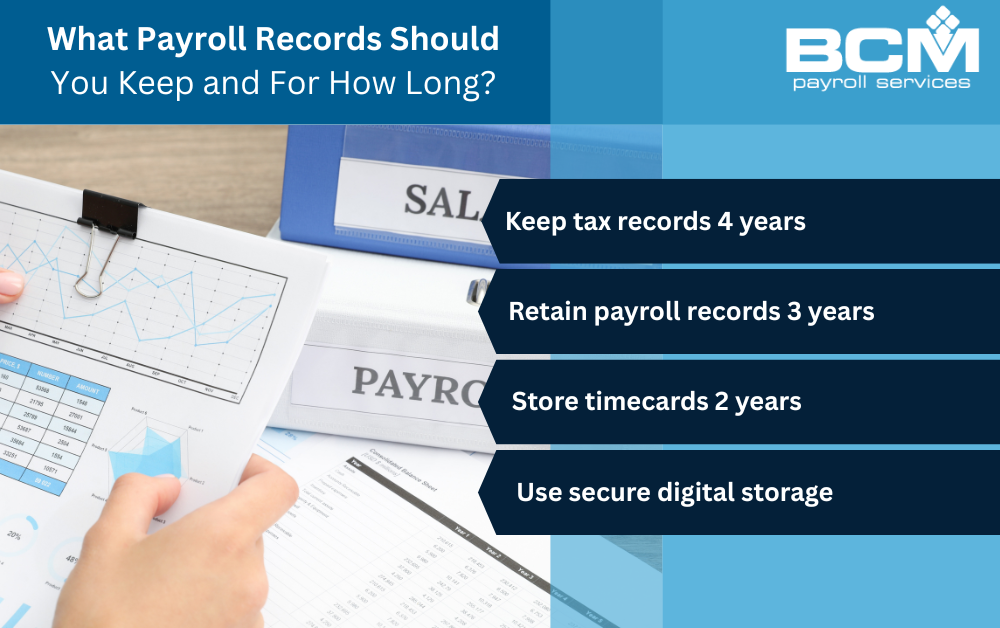
The IRS generally recommends retaining employment tax records for at least four years after the tax becomes due or is paid, whichever is later.
These records may include:
- Payroll tax returns
- Tax deposit records
- Employee withholding forms
- Wage payment documentation
Maintaining these records can help support your business if questions arise regarding payroll tax filings.
Wage and Hour Records
Federal labor regulations generally require employers to keep payroll records related to wages and hours worked for at least three years.
Examples include:
- Payroll records
- Employee pay rates
- Work schedules
- Earnings reports
These records can help verify compliance with wage and hour laws.
Timecards and Supporting Documents
Documents used to calculate wages should generally be retained for at least two years.
This may include:
- Timecards
- Timesheets
- Work schedules
- Overtime calculations
These supporting records provide documentation for payroll calculations and employee compensation
Employee Benefit and Retirement Records
Retention requirements for benefits and retirement records may vary depending on the type of plan and applicable regulations.
In many cases, it is advisable to keep these records for several years after an employee leaves the company.
Because requirements can differ, employers should consult their payroll provider or legal advisor when establishing retention policies.
Why Longer Retention May Be Beneficial
While minimum retention periods exist, some businesses choose to keep payroll records longer.
Extended retention may help with:
- State-specific compliance requirements
- Employee disputes
- Tax audits
- Historical reporting needs
Maintaining records beyond minimum requirements can provide additional protection and flexibility.
Common Payroll Recordkeeping Mistakes
Even businesses with good intentions can make payroll recordkeeping mistakes that create unnecessary risk.
Disorganized Record Storage
When records are stored inconsistently or across multiple systems, finding information becomes difficult.
Poor organization can slow down audits, delay reporting, and increase administrative work.
Discarding Records Too Soon
Deleting or destroying payroll records before the recommended retention period can create compliance problems.
Without proper documentation, employers may struggle to respond to tax inquiries or employee concerns.
Incomplete Payroll Documentation
Missing payroll records can be just as problematic as missing tax filings.
Examples include:
- Missing timesheets
- Missing tax forms
- Missing payroll reports
- Incomplete employee files
Employers should review records regularly to ensure documentation remains complete.
Failing to Back Up Digital Records
Many businesses rely on digital payroll systems, but failing to back up records creates the risk of data loss.
Secure storage and routine backups help protect payroll information from system failures or cyber threats.
Best Practices for Payroll Record Management
Effective payroll recordkeeping starts with having a consistent process.
Use Digital Recordkeeping Systems
Digital payroll systems make it easier to organize, store, and retrieve records when needed.
Benefits include:
- Improved organization
- Faster access to records
- Enhanced security
- Reduced paper storage
Establish a Retention Policy
Every business should have a documented payroll record retention policy.
This policy should outline:
- Which records are retained
- How long they are kept
- How records are securely stored
- When records can be removed
Consistency helps improve compliance and efficiency.
Review Records Regularly
Periodic reviews help ensure payroll records remain complete and accurate.
Employers should verify that:
- Employee information is current
- Tax records are properly stored
- Payroll reports are accessible
- Supporting documentation is complete
Work With a Payroll Provider
Payroll providers often help businesses maintain organized payroll records and reporting systems.
In addition to processing payroll, providers can assist with:
- Payroll reporting
- Tax documentation
- Record storage
- Compliance support
How Payroll Services Can Help With Record Retention
Managing payroll records internally can become challenging as a business grows. Payroll services simplify the process by helping employers maintain organized and accessible records.
Benefits of working with a payroll provider include:
- Secure payroll record storage
- Access to historical payroll data
- Organized reporting
- Support during audits and tax reviews
These services can reduce administrative workload while improving compliance.
Keep Payroll Records Organized and Accessible
Payroll recordkeeping is an essential part of running a successful business. Knowing which records to keep and how long to retain them helps protect your company, supports compliance efforts, and simplifies payroll management.
By maintaining organized payroll records and following recommended retention guidelines, employers can avoid unnecessary risks and be better prepared for audits, reporting requirements, and year-end payroll tasks.
If your business needs help managing payroll records, reporting, and compliance, BCM Payroll can help. Our team provides payroll processing and recordkeeping support designed to keep your payroll organized, accurate, and accessible whenever you need it. Contact BCM Payroll today to learn more about our payroll services.