
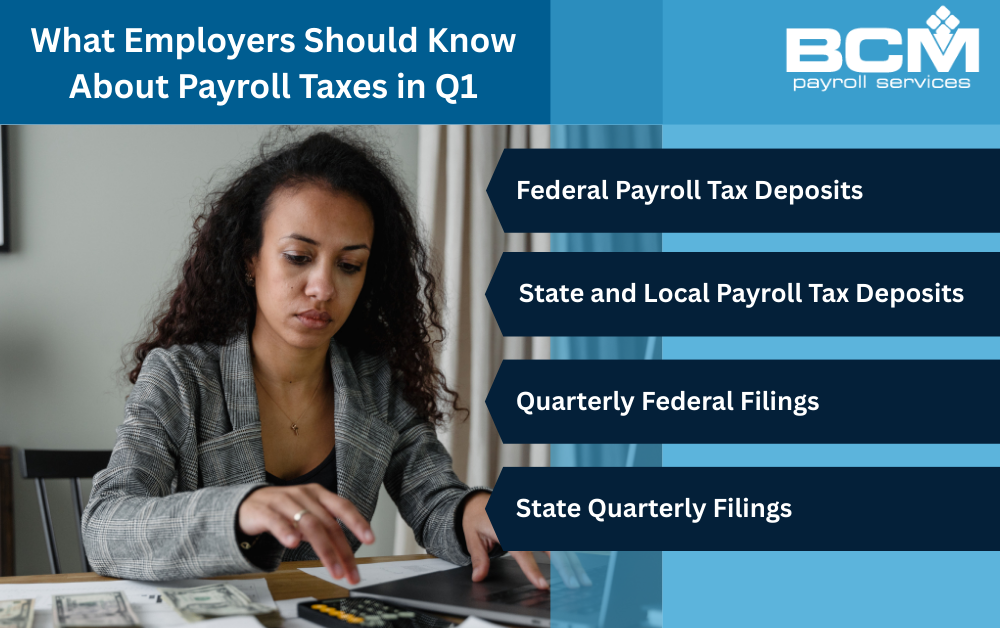
The first quarter of the year sets the tone for your entire payroll process. From January through March, employers face some of the most important payroll tax responsibilities of the year. Deadlines come quickly, wage bases reset, and reporting requirements overlap with year-end obligations.
Missing a deposit, filing incorrect forms, or failing to reconcile totals early can create problems that follow you all year long. Here is what employers need to know about managing payroll taxes in Q1 and how to stay compliant.
Why Q1 Payroll Taxes Matter
Q1 is unique because it combines fresh new-year requirements with carryover responsibilities from the prior year.
In January, employers must:
-
Distribute W-2 forms to employees
-
File required year-end reports with federal and state agencies
-
Begin applying updated tax rates and wage bases
-
Adjust payroll systems for any regulatory changes that took effect January 1
Many federal and state tax rates update at the beginning of the year. Social Security wage bases reset. State unemployment rates may change. If your payroll system is not updated correctly, errors can compound for months before they are caught.
Getting Q1 right helps prevent penalties, corrections, and costly rework later in the year.
Key Payroll Tax Responsibilities in Q1
1. Federal Payroll Tax Deposits
Every payroll run includes federal tax obligations. These typically include:
-
Federal income tax withholding
-
Social Security tax
-
Medicare tax
Employers must deposit these taxes according to their assigned schedule, which is either:
-
Monthly depositor
-
Semi-weekly depositor
Deposit frequency is determined by the IRS based on your prior tax liability. Payments must be made electronically through the Electronic Federal Tax Payment System.
Late or missed deposits can trigger penalties that increase the longer payment is delayed. Even a small delay can result in interest and fines.
2. State and Local Payroll Tax Deposits
In addition to federal obligations, employers must manage:
-
State income tax withholding
-
State unemployment insurance taxes
-
Local payroll taxes where applicable
Many states issue updated unemployment rates in early January. Employers should confirm their new rate and ensure it is properly applied in payroll calculations.
Failure to update rates can result in underpayment or overpayment, both of which create administrative challenges and potential penalties.
3. Quarterly Federal Filings
At the end of Q1, employers must file Form 941, Employer’s Quarterly Federal Tax Return.
Form 941 reports:
-
Total wages paid
-
Federal income taxes withheld
-
Social Security and Medicare taxes
-
Employer tax liability for the quarter
The Q1 Form 941 is due April 30.
Common mistakes on this filing include:
-
Incorrect wage totals
-
Mismatched tax deposit amounts
-
Math errors
-
Failure to reconcile year-end carryover figures
Accurate payroll records throughout January, February, and March make this filing far easier and reduce risk of correction notices.
4. State Quarterly Filings
Most states require quarterly filings that report:
-
State income tax withheld
-
State unemployment wages
-
Total taxable payroll
Deadlines and required forms vary by state, so employers must track state-specific requirements carefully.
Missing state filing deadlines can result in penalties separate from federal fines.
Wage Base Resets Employers Should Watch
Several important wage bases reset at the beginning of the year.
Social Security Wage Base
The Social Security wage base resets every January. Once an employee reaches the annual limit, Social Security withholding stops for the remainder of the year. Payroll systems must track this correctly to avoid over-withholding.
Federal Unemployment Tax (FUTA)
FUTA wage bases also reset in January. Employers should monitor cumulative wages to ensure proper calculation.
State Unemployment Wage Base
State unemployment wage bases vary and often change year to year. Applying the wrong wage base can significantly impact tax calculations.
These resets affect payroll budgeting and cash flow, especially for businesses with high payroll volume early in the year.
Payroll Tax Reconciliations in Q1
Q1 is an ideal time to verify that everything aligns correctly.
Employers should:
-
Reconcile payroll reports with tax deposits
-
Compare W-2 totals to quarterly filings
-
Confirm employee classifications
-
Review benefit deductions and taxable wage calculations
Identifying discrepancies early prevents larger reporting issues in future quarters.
Common Q1 Payroll Tax Mistakes
Even experienced employers can make errors in the first quarter. Common issues include:
-
Missing tax deposit deadlines
-
Using outdated federal or state tax rates
-
Misclassifying employees as contractors
-
Incorrect overtime calculations
-
Filing incomplete or inaccurate quarterly returns
-
Failing to reconcile year-end totals before submitting Q1 reports
Many of these mistakes occur because payroll teams are managing both year-end reporting and new-year setup at the same time.
How Employers Can Stay Compliant
The best way to avoid payroll tax problems is to build a structured process.
Consider these best practices:
-
Maintain a detailed payroll calendar with all deposit and filing deadlines
-
Verify updated tax rates at the start of each year
-
Conduct a Q1 payroll audit
-
Use payroll software that automatically updates tax rates
-
Work with a professional payroll provider to manage deposits and filings
Automation and professional oversight reduce risk and free business owners to focus on operations rather than compliance.
The Cost of Payroll Tax Errors
Payroll tax mistakes are not minor issues.
Penalties can include:
-
IRS fines for late deposits
-
Interest charges on unpaid balances
-
State-level penalties
-
Increased audit risk
Beyond financial penalties, payroll errors can impact employee trust and disrupt cash flow.
Start the Year Strong
The first quarter is more than just another reporting period. It lays the groundwork for the rest of the year.
By staying on top of payroll tax deposits, quarterly filings, wage base resets, and reconciliations, employers can prevent costly mistakes and maintain compliance.
Taking a proactive approach in Q1 ensures smoother payroll processing throughout the year and helps protect your business from unnecessary penalties and stress.